
Many traditional systems and assemblies have long depended on metal components, but advances in high-performance polymers and other non-metallic materials are reshaping what’s possible in modern systems. Today, non-metallic components can match or even exceed metals in wear resistance, durability, chemical resistance, and weight reduction—often at a lower cost. Understanding where these materials can effectively replace metal helps engineers and manufacturers choose the best option for their specific application.
Benefits of Switching From Metallic to Non-Metallic Parts
When used in the right applications, non-metallic materials offer the following key advantages over metallic materials:
- Reduced wear. Many thermoplastic materials offer superior durability and corrosion resistance that you won’t find with metal materials. For example, nylon is highly resistant to rust and corrosion for use in outdoor and heavy industrial environments, while also remaining highly durable due to its minimal deflection when subjected to heavy loads. In addition, metallic parts often require lubrication to provide wear resistance, while non-metallic components are self-lubricating.
- Less downtime. Increased wear resistance and ease of maintenance can also help reduce downtime, keeping systems up and running for longer and maximizing productivity.
- Lower maintenance costs. Metal parts are often costlier to replace and repair. In contrast, non-metallic alternatives are generally lighter, easier to remove and replace, and last longer to mitigate the need for frequent maintenance.
- Enhanced safety. Working with lighter components makes installation, maintenance, and replacement procedures safer for personnel.
Where and When to Replace Metallic With Non-Metallic Parts
There are plenty of components that can benefit from transitioning from metallic to non-metallic materials.
Wear Plates, Bearings, and Bushings
One of the best use cases for replacing metallic with non-metallic parts is wear applications. Comparing non-metallic vs. metallic wear pads, non-metallic wear pads are only 14% of the weight of steel and are much more cost-effective over the service life of the part. Thermoset laminates like Ryertex often go into the fabrication of wear plates, bearings, and other types of wear components in facilities where extreme temperatures, high operational speeds, and heavy loads would otherwise cause rapid wear and tear of metallic parts.
Electrical and Thermal Insulation
Due to their low thermal and electrical conductivity, non-metallic components are ideal for insulation applications in data centers, solar and wind energy plants, and fusion energy systems.
Outrigger Pads
Reliable outrigger pads provide sufficient rig support. Steel and wood outrigger pads are often susceptible to corrosion and cracking, especially in marine environments, but non-metallic outrigger pads can prevent splintering, warping, and other defects while evenly distributing weight.
If you need high-quality non-metallic materials for these or other applications, WS Hampshire offers a wide range of engineered products that can meet your unique requirements.
Case Study: Custom Cast Nylon Wear Pad
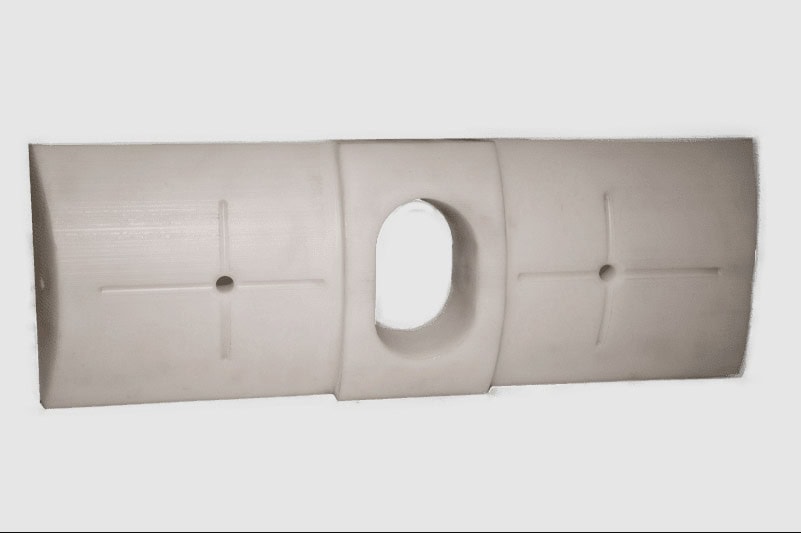
Showcasing the advantages of using non-metallic vs. metallic wear pads is one of our case studies involving a client in need of more reliable slipper pads.
This client was a specialty mill that sought ways to cut down on maintenance and other significant expenses. In assessing cost factors, one of the biggest expenses was their aluminum bronze alloy slipper pad, which required removal using a crane during maintenance and replacement. Additionally, this component didn’t last long, requiring frequent replacement.
To improve this part’s longevity and cost-effectiveness, the mill turned to WS Hampshire for help with material selection. We determined which thermoplastics would yield the best results while helping the client stay within their available budget.
The result was a custom cast nylon wear pad that included self-lubricating and impact-modified features. This material lowered the wear part’s weight from 100 to 20 pounds while maximizing its lifespan.
Quality Non-Metallic Parts From WS Hampshire
For high-quality, engineered non-metallic wear pads, bushings, and other components, WS Hampshire specializes in manufacturing dependable solutions. Based on what your application requires, we offer a range of products and materials, from thermoplastics to composite materials to electrical insulation.
From our 135,000-square-foot facility, we carry an expansive inventory to provide our clients with the products they need when they need them. We offer Ryertex, Timco Technical Thermoplastics, nylon, phenolics, thermoset laminates, and many other engineered materials to meet the needs of each intended application.
To learn more about switching from metallic to non-metallic materials, contact us today.