
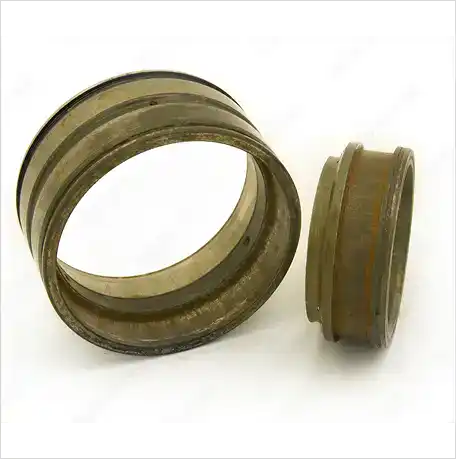
A bushing is a cylindrical component designed to reduce vibration, noise, and friction between two moving parts, one of which is usually a sliding, spinning, or rotating shaft. While metals, including bronze and steel, are traditional bushing materials, non-metallic polymers, including PTFE, PEEK, and high performance composite bushings are also highly effective. They can be used as alternative materials to cast iron or steel in corrosive environments, to reduce lubrication needs in pressing or drilling applications, or as wear- and weather-resistant materials for bushings in exposed or harsh operating conditions.
With decades of industry experience, WS Hampshire offers a comprehensive selection of industrial bushings in a wide range of shapes, sizes, and non-metallic materials.
This practical guide will help buyers and engineers select the most durable and reliable type of bushing material for different applications, including those with abrasive, corrosive, or high-temperature operating conditions.

Factors That Influence Bushing Material Choice
Selecting an appropriate bushing material for an application has a significant effect on productivity, cycle times, and processing times, and lubrication and other maintenance needs.
To make the best material choice, it’s important to look at the operating conditions and material properties.
- Chemical Exposure
Bushings are used in many applications that involve chemicals, including drilling, manufacturing, food processing, vehicle systems, and tools. Chemical exposure can lead to reduced bushing performance or outright failure, both of which impact operational efficiency. Risks of chemical exposure include:

- Material degradation. Certain chemicals can alter a material’s structural properties, reducing its overall durability and strength. Even relatively weak chemicals can cause damage to bushings through long-term exposure.
- Premature failure. Damage like surface pitting or cracking can trap abrasive particles or chemicals, accelerating the wear and tear of the component, leading to a shortened service life.
- Rapid corrosion. Strong acids and bases can quickly corrode metal materials like steel, brass, and bronze. Polymers and composites often resist this damage better.
- Swelling. Some non-metallic materials are prone to moisture absorption, which can lead to swelling and dimensional instability that increase heat and friction.
It is essential to select a bushing material with adequate chemical resistance. Many metals may tend to degrade or corrode in extreme environments, while advanced thermoplastics can often stand up to solvents, alkalis, and acids.
- Load Capacity
Bushings experience loading from whether they are used with static or dynamic components, operating pressures and temperatures, and the speed at which components move. Most bushings are subject to multiple of these forces at the same time, and if a material is not rated to withstand each type of loading, the bushing can become damaged or fail entirely. Thermoplastics and composite materials reinforced with fiber can often withstand high operating loads.
- Operational Temperature Range
Using thermoplastics for heat-resistant bushings can help to conduct or insulate heat, depending on the application needs. High-performance materials, such as PTFE and PEEK, offer excellent thermal resistance and can withstand both high-heat and cryogenic conditions without deformation.
- Lubrication Needs
Composite materials that include self-lubricating additives reduce the frequency of lubrication and the amount of lubricant needed. This increases productive uptime and cuts down on maintenance requirements. Industrial bushings made from these materials can also reduce the risk of mechanical failure due to improper lubrication or excessive friction.
- Wear Characteristics
Bushings made from thermoplastics and composite laminates exhibit a low coefficient of friction, which helps protect mated parts made of soft metals, such as aluminum. They also help minimize wear on costly or labor-intensive components, protecting the parts with which they come into contact.
Learn More About Non-Metallic Bushings From WS Hampshire
The WS Hampshire team brings years of experience with industrial plastics to every project and product, including bushings, bearings, and wear plates. Our non-metallic alternatives to traditional metal for bushings can reduce lubrication and maintenance needs, improve corrosion resistance, and save money over traditional metal materials. All products are fabricated in-house for short lead times and continuity of workmanship and quality.
Contact us today to learn more about material selection for your next industrial bushing project!