
Replacing Metal Components With Non-Metallic Materials: Key Benefits and Applications
Comments Off on Replacing Metal Components With Non-Metallic Materials: Key Benefits and ApplicationsMany traditional systems and assemblies have long depended on metal components, but advances in high-performance polymers and other non-metallic materials are reshaping what’s possible in modern systems. Today, non-metallic components can match or even exceed metals in wear resistance, durability, chemical resistance, and weight reduction—often at a lower cost. Understanding where these materials can effectively replace metal helps engineers and manufacturers choose the best option for their specific application.
Benefits of Switching From Metallic to Non-Metallic Parts
When used in the right applications, non-metallic materials offer the following key advantages over metallic materials:
- Reduced wear. Many thermoplastic materials offer superior durability and corrosion resistance that you won’t find with metal materials. For example, nylon is highly resistant to rust and corrosion for use in outdoor and heavy industrial environments, while also remaining highly durable due to its minimal deflection when subjected to heavy loads. In addition, metallic parts often require lubrication to provide wear resistance, while non-metallic components are self-lubricating.
- Less downtime. Increased wear resistance and ease of maintenance can also help reduce downtime, keeping systems up and running for longer and maximizing productivity.
- Lower maintenance costs. Metal parts are often costlier to replace and repair. In contrast, non-metallic alternatives are generally lighter, easier to remove and replace, and last longer to mitigate the need for frequent maintenance.
- Enhanced safety. Working with lighter components makes installation, maintenance, and replacement procedures safer for personnel.
Where and When to Replace Metallic With Non-Metallic Parts
There are plenty of components that can benefit from transitioning from metallic to non-metallic materials.
Wear Plates, Bearings, and Bushings
One of the best use cases for replacing metallic with non-metallic parts is wear applications. Comparing non-metallic vs. metallic wear pads, non-metallic wear pads are only 14% of the weight of steel and are much more cost-effective over the service life of the part. Thermoset laminates like Ryertex often go into the fabrication of wear plates, bearings, and other types of wear components in facilities where extreme temperatures, high operational speeds, and heavy loads would otherwise cause rapid wear and tear of metallic parts.
Electrical and Thermal Insulation
Due to their low thermal and electrical conductivity, non-metallic components are ideal for insulation applications in data centers, solar and wind energy plants, and fusion energy systems.
Outrigger Pads
Reliable outrigger pads provide sufficient rig support. Steel and wood outrigger pads are often susceptible to corrosion and cracking, especially in marine environments, but non-metallic outrigger pads can prevent splintering, warping, and other defects while evenly distributing weight.
If you need high-quality non-metallic materials for these or other applications, WS Hampshire offers a wide range of engineered products that can meet your unique requirements.
Case Study: Custom Cast Nylon Wear Pad
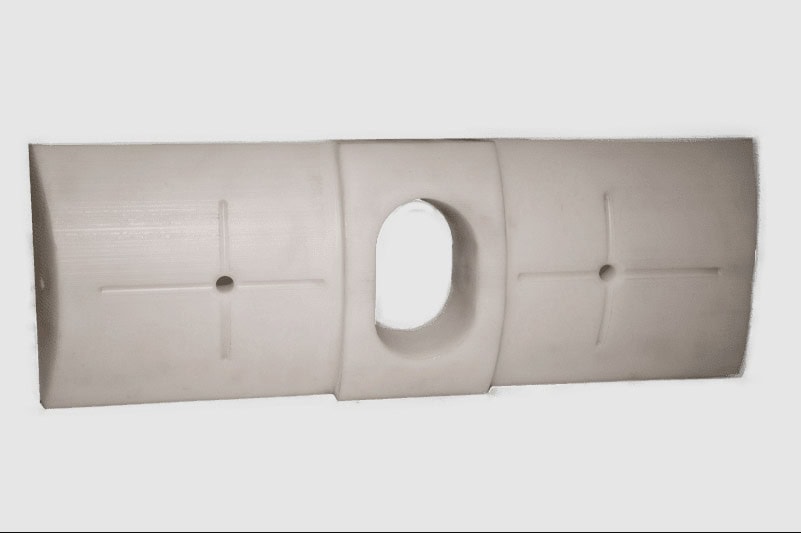
Showcasing the advantages of using non-metallic vs. metallic wear pads is one of our case studies involving a client in need of more reliable slipper pads.
This client was a specialty mill that sought ways to cut down on maintenance and other significant expenses. In assessing cost factors, one of the biggest expenses was their aluminum bronze alloy slipper pad, which required removal using a crane during maintenance and replacement. Additionally, this component didn’t last long, requiring frequent replacement.
To improve this part’s longevity and cost-effectiveness, the mill turned to WS Hampshire for help with material selection. We determined which thermoplastics would yield the best results while helping the client stay within their available budget.
The result was a custom cast nylon wear pad that included self-lubricating and impact-modified features. This material lowered the wear part’s weight from 100 to 20 pounds while maximizing its lifespan.
Quality Non-Metallic Parts From WS Hampshire
For high-quality, engineered non-metallic wear pads, bushings, and other components, WS Hampshire specializes in manufacturing dependable solutions. Based on what your application requires, we offer a range of products and materials, from thermoplastics to composite materials to electrical insulation.
From our 135,000-square-foot facility, we carry an expansive inventory to provide our clients with the products they need when they need them. We offer Ryertex, Timco Technical Thermoplastics, nylon, phenolics, thermoset laminates, and many other engineered materials to meet the needs of each intended application.
To learn more about switching from metallic to non-metallic materials, contact us today.
How OEM-Approved Composite Bearings Outperform Metal in Harsh Environments
Comments Off on How OEM-Approved Composite Bearings Outperform Metal in Harsh Environments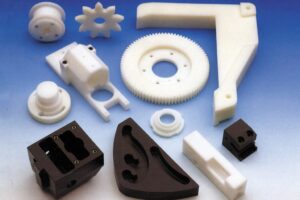 In high-wear, high-stress applications, bearings provide critical support, reducing friction and promoting smooth motion. When it comes to heavy equipment, marine, and industrial machinery, metal bearings have been the go-to choice for decades. Now, traditional metal bearings are being increasingly replaced in challenging operating conditions by composite bearings and bushings.
These composite, non-metal components can deliver longer lifespans, lower maintenance needs, and lightweight performance. If you’re an engineer or maintenance professional prioritizing durability and uptime, here’s everything you need to understand about OEM-validated composite bearings, specifically those featuring Ryertex® laminates and Timco™ technical thermoplastics and the numerous ways they outperform traditional metal.
Advantages of Composite Bearings Over Metal Bearings
Composite bearings are engineered using advanced thermoset resins and thermoplastics designed to perform well in environments that promote corrosion and wear. Unlike generic plastics, materials like Ryertex® are reinforced with glass, linen, or paper fabrics to provide structural integrity that rivals bronze and steel.
Corrosion Resistance
Even with expensive coatings or stainless alloys, metal bearings are constantly threatened by oxidation. Composite bearings, particularly those made from Acetal (Delrin®) or UHMW, do not degrade, pit, or rust when exposed to chemicals, salt spray, or water. This makes them the gold standard for marine applications and chemical processing where exposure is unavoidable.
Reduced Friction and Wear
Composite bearings enable low-friction performance, often with self-lubricating properties. Materials such as PET-GLor MoS2-filled Nylon incorporate lubricants directly into the polymer matrix. As a result, less energy is lost and wear rates remain low, especially in oscillating or slow-moving applications where metal bearings often suffer from “stick-slip” issues.
Stable Performance Across Temperature Fluctuations
While some plastics struggle with heat, high-performance composites like PEEK and specific Ryertex® grades are designed to maintain dimensional stability across a broad range of temperatures (from cryogenic up to 572° F). This prevents the binding and performance degradation common in metal-on-metal systems during thermal expansion.
No Lubrication Requirements
Many composite bearings are “fit and forget.” By eliminating the need for regular grease intervals, maintenance teams benefit from cleaner operating conditions and a total removal of the risk of lubrication-related failures. This is especially critical in “clean” industries like food processing or in remote heavy equipment where service calls are costly.
Common High-Wear Applications of Non-Metal Bearings
Heavy Equipment
In agriculture, construction, and mining, equipment operates under extreme shock loads. Ryertex composite bushings are often preferred here because they can absorb impact and resist contamination better than rigid steel, protecting the more expensive pins and housings from damage.
Marine Applications
In propulsion components and steering systems, composite bearings excel. Because materials like Nylon and Acetal have low water absorption and resist salt-water corrosion, OEMs trust them to operate fully submerged for long periods without seizing.
Industrial Machinery
Timco™ Technical Thermoplastics are frequently used in conveyors and processing equipment. Whether it is the chemical resistance of PEEK or the impact strength of UHMW, these materials ensure that repetitive motion doesn’t lead to the rapid wear-down common with brass or bronze bushings.
Why OEM Approval Matters
Not all composite materials are created equal. OEM approval signifies that a material such as a specific grade of Ryertex® has been thoroughly vetted to meet the exact tolerances and load requirements of the original equipment manufacturer.
At WS Hampshire, we don’t just provide plastic; we provide engineered solutions. Our OEM-approved composite bearings provide:
- Consistent Material Quality: Precise resin-to-fabric ratios in every Ryertex® sheet and tube.
- Seamless Compatibility: Fabricated in-house to match original equipment blueprints exactly.
- Lower Risk: Proven performance that prevents unplanned downtime and premature failure.
Contact WS Hampshire for OEM-Approved Composite Bearings
If you’re looking at bearing solutions for your high-wear applications in heavy equipment, marine systems, or industrial machinery, WS Hampshire is ready to help identify the right Ryertex® or Timco™ material for your operation.
Contact us today and let’s optimize your equipment’s lifecycle.